Image 1 of 5
Image 2 of 5
Image 3 of 5
Image 4 of 5
Image 5 of 5
Raw Bee Pollen: Hand-Harvested Wildflower Granules, 8 oz Jar
🐝Collected by our bees. Jarred by our hands👋
Watch a honey bee work a flower and you'll see her come away dusted in gold. She combs that dust from her body while still in flight, packs it into the stiff-haired baskets on her hind legs with a little nectar to hold it together, and carries it home. By the time she reaches the hive entrance, she's wearing two dense pellets that can weigh nearly a third of what she does.
That's bee pollen. Not honey — honey is transformed nectar, the colony's fuel. Pollen is the colony's food. It's what the nurse bees eat, and it's the only thing a hive has to raise its young on. Every bee that has ever flown was built out of it.
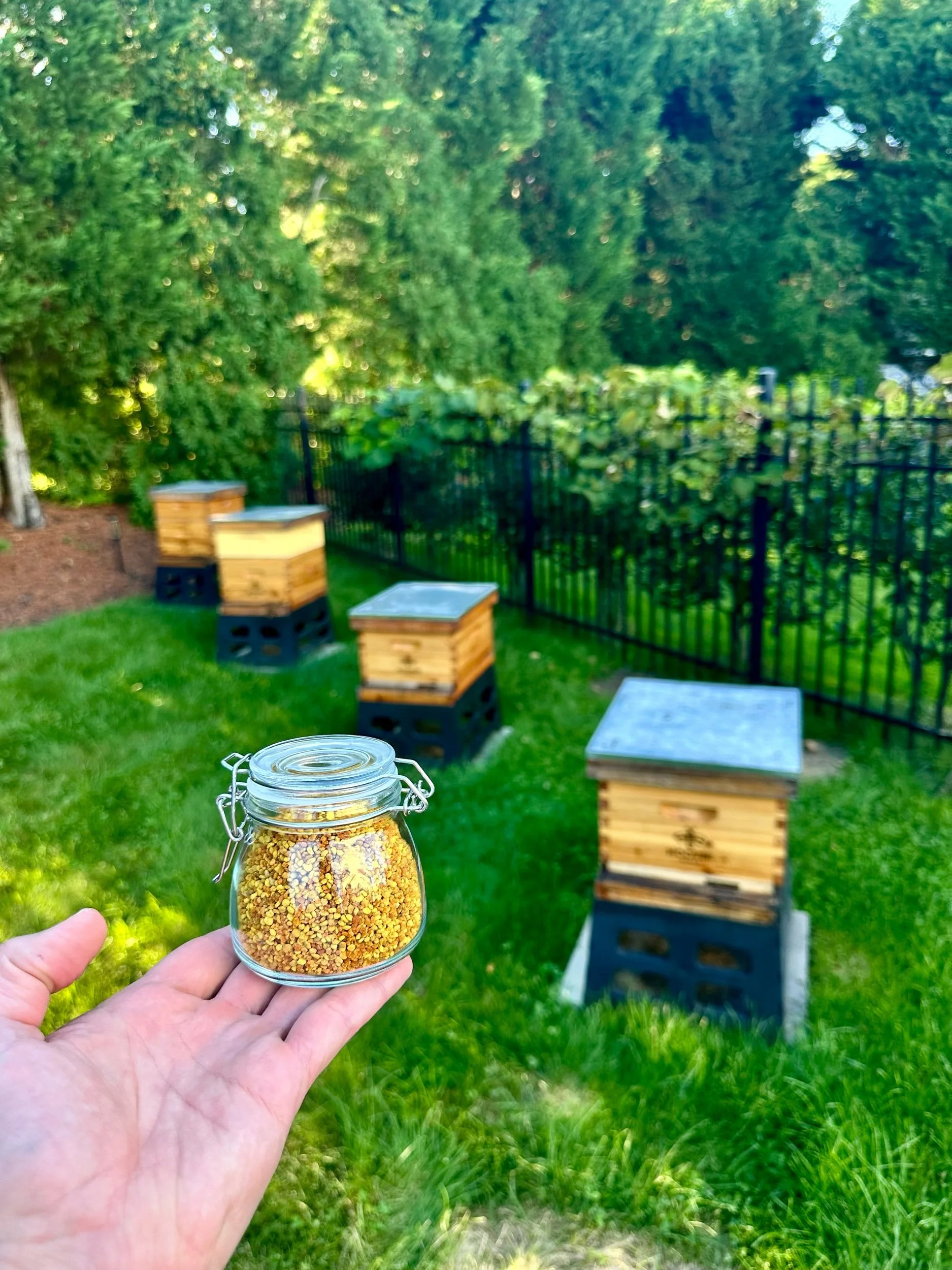
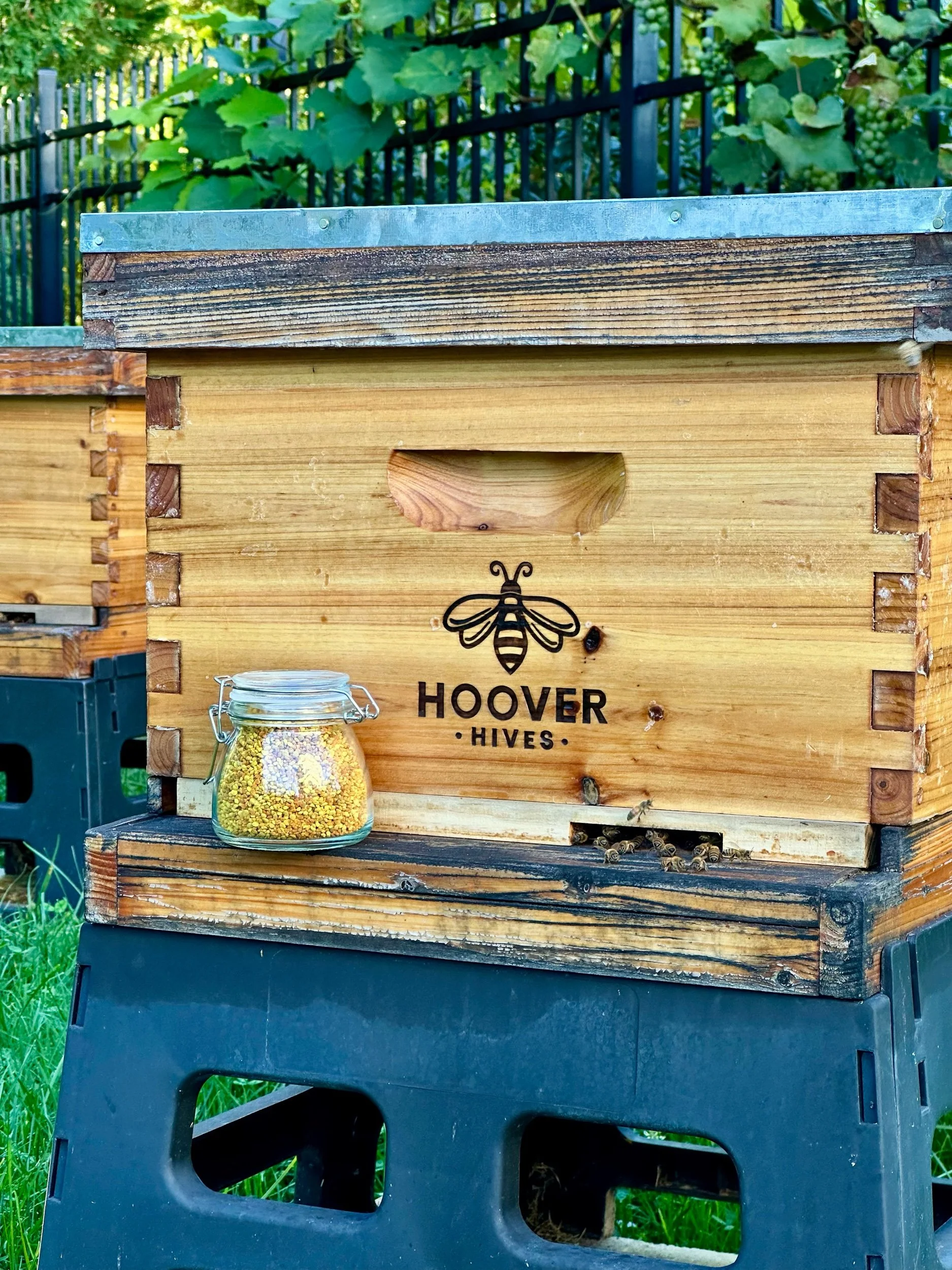
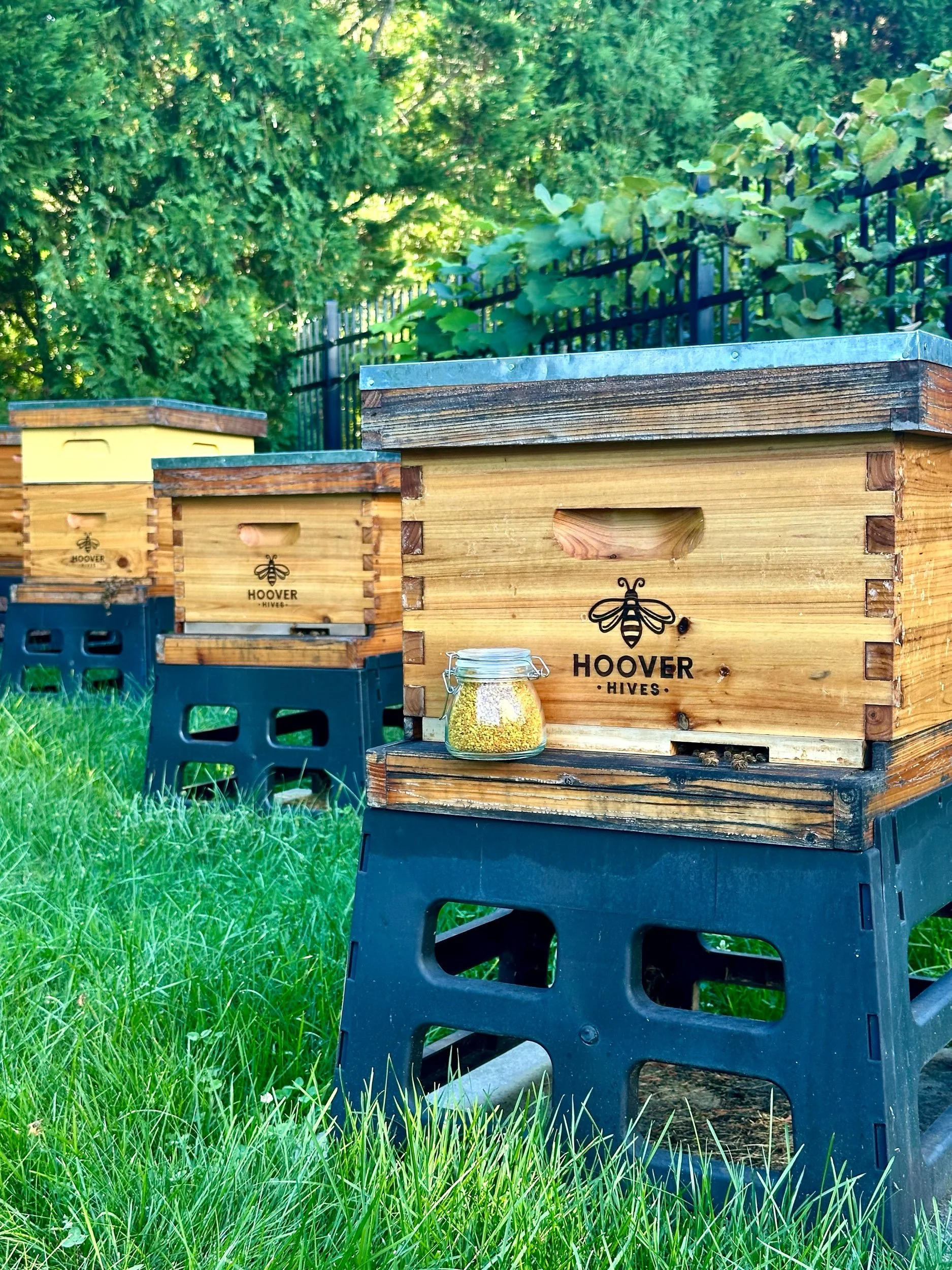
This jar is that pollen, taken fresh at the entrance of our own hives here in Zone 7, New York, and handled from that moment on by one person.
🎞️ A jar of granules is a record of a season:
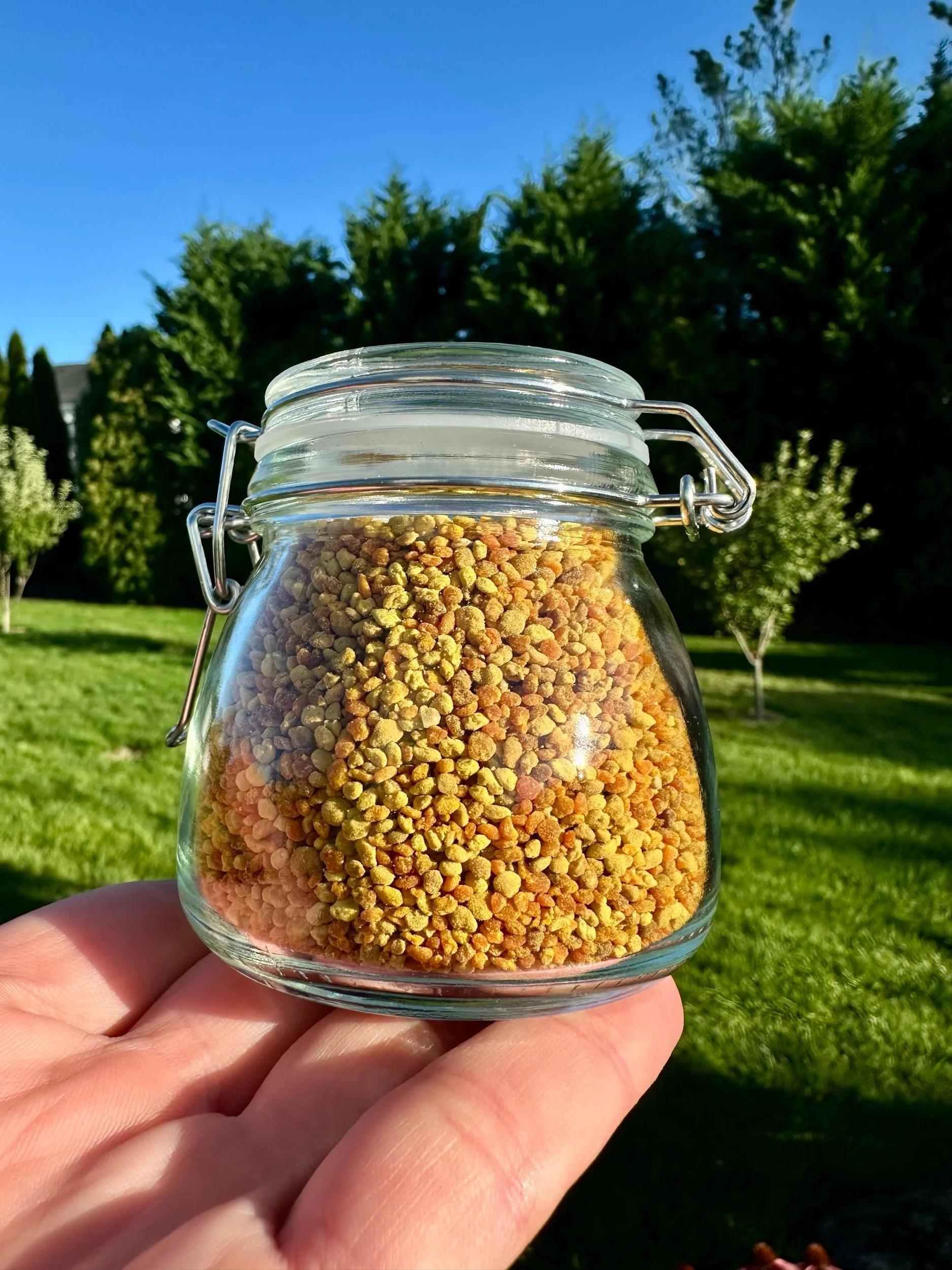
Pour some into your palm and you'll notice it isn't one color. There's bright yellow and dusty gold, brick red, olive, gray-green, sometimes a pellet so dark it reads as black. Each color is a different flower. Ours is a wildflower pollen — polyfloral, in the trade — which means the bees chose the sources, not us.
In early spring that means red maple, willow, and dandelion, and the pollen runs bright and greenish-gold. By apple and cherry bloom it turns cream and pale tan. Summer clover and basswood bring in deep golds and browns. And in September the goldenrod comes on and the traps fill with a color so saturated it looks artificial.
So batches don't match each other, and they aren't supposed to. Uniform pollen is blended pollen, usually pooled from many suppliers across many countries. If your jar this fall looks different from your jar last spring, that's the flowers talking.
The flavor follows the color. Spring pollen is soft, floral, faintly sweet. Fall goldenrod is earthy and almost savory, with a bitter edge some people love immediately and others need a week to come around to. It is a real ingredient with a real flavor — not a neutral powder.
🫙What's in the jar:
Bee pollen is the protein of the hive. Where nectar is sugar, pollen is where the bees get their protein, their fats, their vitamins and minerals — the whole nutritional load of a colony arrives on the legs of foragers, a few milligrams at a time. Flowers make it as their reproductive material, which is why it's dense with the things a growing organism needs.
People have eaten it for a very long time. It appears in the traditional foodways of Greece, Egypt, China, and much of eastern Europe, usually eaten plainly — a spoonful in the morning, stirred into something soft.
We'll leave it there, because we'd rather undersell this than oversell it. Bee pollen is a whole food, and we think it's a remarkable one. It isn't a treatment for anything, and anyone marketing it to you as one is telling you more than they know.
❓Why there's never much of it:
A pollen trap is a screen at the hive entrance sized so a returning forager has to squeeze through, brushing some of her load loose into a tray below. The word some is doing real work in that sentence. We size and time our traps to take a small share and let the rest through, because a colony without pollen stops raising brood, and a colony that stops raising brood is a colony in trouble by August. Trap too hard and you get a good week of pollen and a bad year of bees.
So we run traps on strong colonies only, for a few days at a stretch, and pull them the moment the bees need the flow. Some weeks we harvest nothing at all.
What we do collect comes out of the tray wet. Fresh pollen holds a lot of moisture — enough that it will mold within a few days if you simply put it in a jar, which is exactly what most people imagine happens next. It doesn't. Each tray gets screened and then hand-sorted, pellet by pellet, to pick out bee legs, wax crumbs, and bits of the hive. Then it goes into a dehumidifier and dries slowly at low temperature over many hours, until a pellet crumbles cleanly between two fingers instead of smearing.
Low and slow matters. Heat is fast and it would save us a day, but heat also changes a raw food into a cooked one, and raw is the entire point of the product. When the moisture is where we want it, the pollen goes straight into an airtight 8 oz jar before it can pull humidity back out of the air.
That's the honest arithmetic behind the price and the small numbers: a handful of hives, a season that runs a few months, days of hand-work per batch, and a hard rule that the bees eat first. When a batch sells out, this listing goes dark until the next one is jarred. There's no back room.
⚖️ How much, and how to start:
Start with a few granules — not a spoonful. Please read the allergy warning below before your first taste. This matters more here than with almost any other food we sell.
Once you've worked through the first few days without any reaction, most people settle into a routine something like this. Take three to five individual pellets on day one and wait a full day. If all is well, move to a quarter teaspoon daily for the rest of that first week. Step up to half a teaspoon in week two. From week three onward, one to two teaspoons a day is the amount most long-time pollen eaters land on, and there's no particular reason to go beyond it.
One teaspoon in the morning is where the great majority of our customers end up. At that rate an 8 oz jar lasts roughly six to eight weeks.
Take it with food rather than on its own — it tends to go down more easily alongside something with a little fat in it, like yogurt, whole milk, or nut butter.
👨🍳 Ways to use it
One rule above all others: don't cook it. Add pollen after the heat, never before. If something goes in the oven or the pan, sprinkle the pollen on when it comes out. Blending into a cold smoothie is fine; stirring into hot tea is not.
At breakfast, the classic is a teaspoon over plain yogurt with a drizzle of raw honey, and it stays the classic because nothing else is quite as good. It works the same way in overnight oats, chia pudding, or cottage cheese with fruit — stir it in at the end rather than letting it soak. It blends cleanly into banana or berry smoothies. On toast, it presses right into peanut butter and stays put; on sourdough with whipped ricotta, honey, and cracked pepper, it becomes something you'd serve to company.
For snacks and sweets, fold a couple of tablespoons into a batch of no-bake energy bites with dates, oats, and nut butter. Toss it into granola after the granola has baked and cooled. Scatter it over dark chocolate bark before it sets, with a little flaky salt. It's excellent on ice cream, where the cold suits it.
On the savory side, it makes a genuinely good vinaigrette — olive oil, cider vinegar, raw honey, mustard, salt, and a teaspoon of pollen, shaken hard. The pollen gives the dressing body and a nutty floral note that's hard to place. Use that over goat cheese, beets, and bitter greens. You can also treat it like a finishing salt and sprinkle it over roasted vegetables or a bowl of soup at the table.
Two things worth knowing. If you stir pollen into something wet and let it sit five or ten minutes, the pellets soften and give up considerably more flavor. And if you don't care for the granular texture, a few seconds in a spice grinder turns it into a powder that disappears into smoothies and dressings entirely.
🏡 Storage:
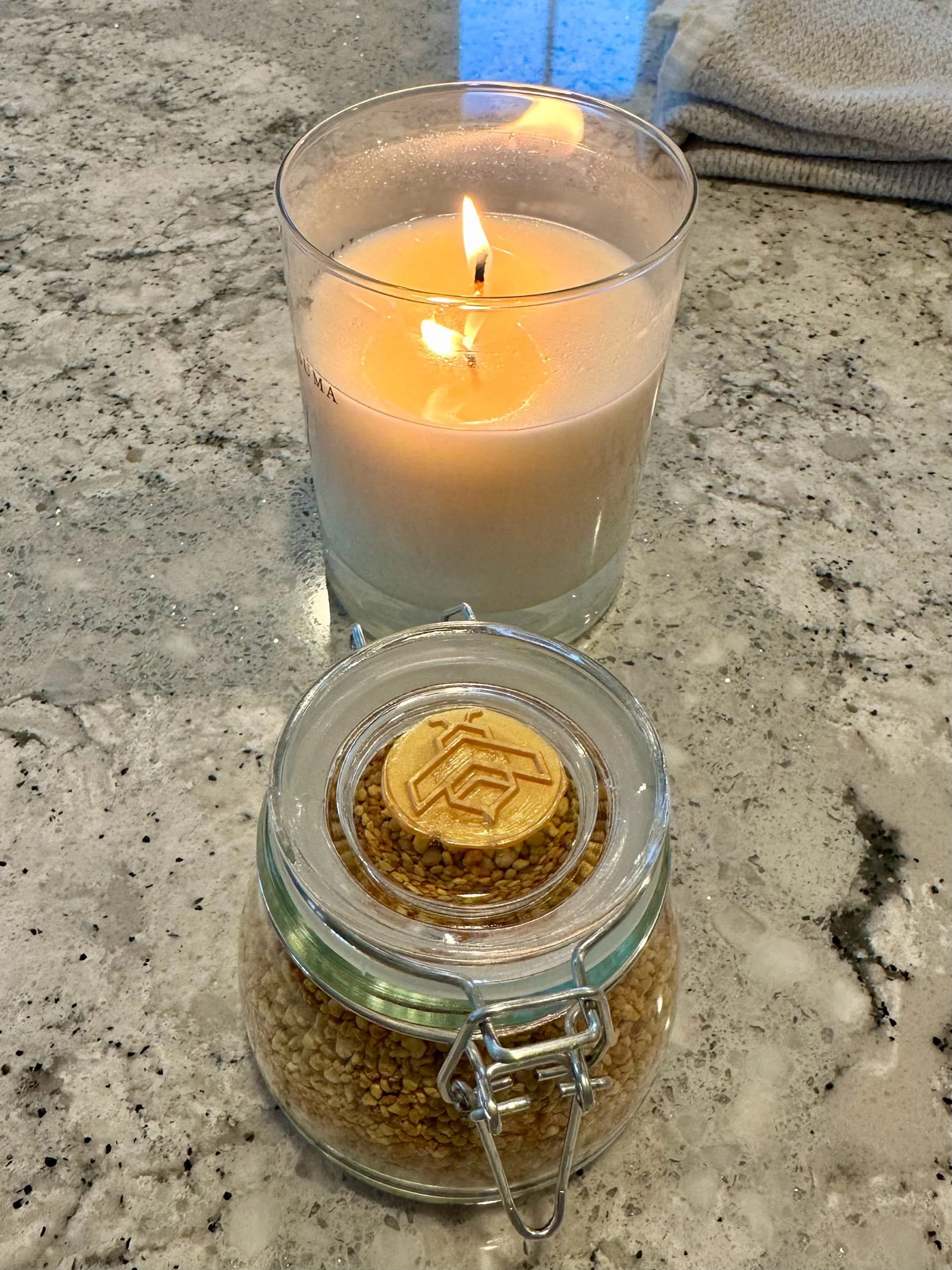
The jar reseals, and keeping it sealed is the whole job — pollen readily pulls moisture out of the air, and moisture is what shortens its life.
A cool, dark, dry cupboard is fine for everyday use. The refrigerator is better. The freezer is best, and pollen freezes and thaws with no change in texture at all, so you can scoop from a frozen jar and put it straight back. If your pollen starts to clump, it has taken on humidity — move it to the freezer and enjoy it sooner rather than later.
⚠️ Allergy warning — please read before your first taste:
This product is raw flower pollen. It can cause allergic reactions, and those reactions can be severe.
Possible symptoms include itching or tingling of the mouth, lips, or throat, hives, swelling, stomach upset, light-headedness, shortness of breath, and in rare cases anaphylaxis, which is a medical emergency.
Begin with three to five individual granules and wait 24 hours. If you notice any reaction at all, stop and contact your doctor. Increase your amount slowly over several weeks rather than all at once.
Do not use this product if you have a known allergy to pollen, bee stings, honey, propolis, or royal jelly; have ever had anaphylaxis or carry an epinephrine auto-injector; or have severe asthma or severe seasonal allergies.
Talk to your doctor before using this product if you take warfarin or any other blood thinner, take any prescription medication, are managing an ongoing health condition, or are pregnant or breastfeeding. Not recommended for young children without a pediatrician's guidance.
A word about hay fever. You may have read that eating local pollen works like a natural allergy shot. We won't repeat that, because we don't believe it holds up — and because the pollen bees collect is mostly heavy flower pollen, while hay fever is generally caused by the light, windborne pollen of grasses, ragweed, and certain trees. Please don't buy this expecting it to do anything about your allergies, and please don't use it in place of care from your doctor.
This statement has not been evaluated by the Food and Drug Administration. This product is not intended to diagnose, treat, cure, or prevent any disease.
ℹ️ Product details:
| Net weight | 8 oz (227 g) |
| Contents | Raw wildflower bee pollen granules |
| Ingredients | Bee pollen |
| Allergens | Contains pollen and trace bee products |
| Origin | Our own apiary — Zone 7, New York |
| Processing | Hand-screened and hand-sorted; dried slowly at low temperature; unheated, unwashed, unblended |
| Container | Resealable airtight 8 oz jar |
| Storage | Cool, dark, and dry; refrigerate or freeze for longer keeping |
| Best by | 12 months sealed; longer frozen |
| Servings | About 45 at one teaspoon |
- Raw and unheated — nothing added, nothing removed
- Wildflower pollen from our own New York hives
- Hand-sorted pellet by pellet
- Dried slowly at low temperature, then jarred immediately
- Resealable 8 oz jar, freezer safe
- Small seasonal harvest — sells out fast
- ⚠️ Contains pollen. Please read the allergy warning before use.
FAQ’s:
Is this honey?
No. Honey is nectar the bees have transformed and stored. Pollen is a separate thing entirely — the hive's protein, collected from flowers on the bees' legs.
Is it bee bread?
No. Bee bread is pollen after the colony has packed it into comb and let it ferment. This is the fresh pellet, taken at the entrance before it ever reaches the comb.
Why doesn't my jar look like the photo?
Because different flowers make different-colored pollen and different flowers bloom in different weeks. Color varies by batch, and always will.
Is it vegan?
No. It's collected by an animal, from an animal we keep. We'd rather say so plainly.
Can I bake with it?
You can, but the whole appeal of this product is that it's raw. Add it after cooking.
What does it taste like?
Floral, nutty, slightly bitter, a little sweet. Most people like it best against something sweet or creamy the first few times.
How long does a jar last?
Six to eight weeks at a teaspoon a day.
When are you restocking?
When the bees restock us. Join the waitlist and you'll get an email the day a new batch is jarred.
🐝Collected by our bees. Jarred by our hands👋
Watch a honey bee work a flower and you'll see her come away dusted in gold. She combs that dust from her body while still in flight, packs it into the stiff-haired baskets on her hind legs with a little nectar to hold it together, and carries it home. By the time she reaches the hive entrance, she's wearing two dense pellets that can weigh nearly a third of what she does.
That's bee pollen. Not honey — honey is transformed nectar, the colony's fuel. Pollen is the colony's food. It's what the nurse bees eat, and it's the only thing a hive has to raise its young on. Every bee that has ever flown was built out of it.
This jar is that pollen, taken fresh at the entrance of our own hives here in Zone 7, New York, and handled from that moment on by one person.
🎞️ A jar of granules is a record of a season:
Pour some into your palm and you'll notice it isn't one color. There's bright yellow and dusty gold, brick red, olive, gray-green, sometimes a pellet so dark it reads as black. Each color is a different flower. Ours is a wildflower pollen — polyfloral, in the trade — which means the bees chose the sources, not us.
In early spring that means red maple, willow, and dandelion, and the pollen runs bright and greenish-gold. By apple and cherry bloom it turns cream and pale tan. Summer clover and basswood bring in deep golds and browns. And in September the goldenrod comes on and the traps fill with a color so saturated it looks artificial.
So batches don't match each other, and they aren't supposed to. Uniform pollen is blended pollen, usually pooled from many suppliers across many countries. If your jar this fall looks different from your jar last spring, that's the flowers talking.
The flavor follows the color. Spring pollen is soft, floral, faintly sweet. Fall goldenrod is earthy and almost savory, with a bitter edge some people love immediately and others need a week to come around to. It is a real ingredient with a real flavor — not a neutral powder.
🫙What's in the jar:
Bee pollen is the protein of the hive. Where nectar is sugar, pollen is where the bees get their protein, their fats, their vitamins and minerals — the whole nutritional load of a colony arrives on the legs of foragers, a few milligrams at a time. Flowers make it as their reproductive material, which is why it's dense with the things a growing organism needs.
People have eaten it for a very long time. It appears in the traditional foodways of Greece, Egypt, China, and much of eastern Europe, usually eaten plainly — a spoonful in the morning, stirred into something soft.
We'll leave it there, because we'd rather undersell this than oversell it. Bee pollen is a whole food, and we think it's a remarkable one. It isn't a treatment for anything, and anyone marketing it to you as one is telling you more than they know.
❓Why there's never much of it:
A pollen trap is a screen at the hive entrance sized so a returning forager has to squeeze through, brushing some of her load loose into a tray below. The word some is doing real work in that sentence. We size and time our traps to take a small share and let the rest through, because a colony without pollen stops raising brood, and a colony that stops raising brood is a colony in trouble by August. Trap too hard and you get a good week of pollen and a bad year of bees.
So we run traps on strong colonies only, for a few days at a stretch, and pull them the moment the bees need the flow. Some weeks we harvest nothing at all.
What we do collect comes out of the tray wet. Fresh pollen holds a lot of moisture — enough that it will mold within a few days if you simply put it in a jar, which is exactly what most people imagine happens next. It doesn't. Each tray gets screened and then hand-sorted, pellet by pellet, to pick out bee legs, wax crumbs, and bits of the hive. Then it goes into a dehumidifier and dries slowly at low temperature over many hours, until a pellet crumbles cleanly between two fingers instead of smearing.
Low and slow matters. Heat is fast and it would save us a day, but heat also changes a raw food into a cooked one, and raw is the entire point of the product. When the moisture is where we want it, the pollen goes straight into an airtight 8 oz jar before it can pull humidity back out of the air.
That's the honest arithmetic behind the price and the small numbers: a handful of hives, a season that runs a few months, days of hand-work per batch, and a hard rule that the bees eat first. When a batch sells out, this listing goes dark until the next one is jarred. There's no back room.
⚖️ How much, and how to start:
Start with a few granules — not a spoonful. Please read the allergy warning below before your first taste. This matters more here than with almost any other food we sell.
Once you've worked through the first few days without any reaction, most people settle into a routine something like this. Take three to five individual pellets on day one and wait a full day. If all is well, move to a quarter teaspoon daily for the rest of that first week. Step up to half a teaspoon in week two. From week three onward, one to two teaspoons a day is the amount most long-time pollen eaters land on, and there's no particular reason to go beyond it.
One teaspoon in the morning is where the great majority of our customers end up. At that rate an 8 oz jar lasts roughly six to eight weeks.
Take it with food rather than on its own — it tends to go down more easily alongside something with a little fat in it, like yogurt, whole milk, or nut butter.
👨🍳 Ways to use it
One rule above all others: don't cook it. Add pollen after the heat, never before. If something goes in the oven or the pan, sprinkle the pollen on when it comes out. Blending into a cold smoothie is fine; stirring into hot tea is not.
At breakfast, the classic is a teaspoon over plain yogurt with a drizzle of raw honey, and it stays the classic because nothing else is quite as good. It works the same way in overnight oats, chia pudding, or cottage cheese with fruit — stir it in at the end rather than letting it soak. It blends cleanly into banana or berry smoothies. On toast, it presses right into peanut butter and stays put; on sourdough with whipped ricotta, honey, and cracked pepper, it becomes something you'd serve to company.
For snacks and sweets, fold a couple of tablespoons into a batch of no-bake energy bites with dates, oats, and nut butter. Toss it into granola after the granola has baked and cooled. Scatter it over dark chocolate bark before it sets, with a little flaky salt. It's excellent on ice cream, where the cold suits it.
On the savory side, it makes a genuinely good vinaigrette — olive oil, cider vinegar, raw honey, mustard, salt, and a teaspoon of pollen, shaken hard. The pollen gives the dressing body and a nutty floral note that's hard to place. Use that over goat cheese, beets, and bitter greens. You can also treat it like a finishing salt and sprinkle it over roasted vegetables or a bowl of soup at the table.
Two things worth knowing. If you stir pollen into something wet and let it sit five or ten minutes, the pellets soften and give up considerably more flavor. And if you don't care for the granular texture, a few seconds in a spice grinder turns it into a powder that disappears into smoothies and dressings entirely.
🏡 Storage:
The jar reseals, and keeping it sealed is the whole job — pollen readily pulls moisture out of the air, and moisture is what shortens its life.
A cool, dark, dry cupboard is fine for everyday use. The refrigerator is better. The freezer is best, and pollen freezes and thaws with no change in texture at all, so you can scoop from a frozen jar and put it straight back. If your pollen starts to clump, it has taken on humidity — move it to the freezer and enjoy it sooner rather than later.
⚠️ Allergy warning — please read before your first taste:
This product is raw flower pollen. It can cause allergic reactions, and those reactions can be severe.
Possible symptoms include itching or tingling of the mouth, lips, or throat, hives, swelling, stomach upset, light-headedness, shortness of breath, and in rare cases anaphylaxis, which is a medical emergency.
Begin with three to five individual granules and wait 24 hours. If you notice any reaction at all, stop and contact your doctor. Increase your amount slowly over several weeks rather than all at once.
Do not use this product if you have a known allergy to pollen, bee stings, honey, propolis, or royal jelly; have ever had anaphylaxis or carry an epinephrine auto-injector; or have severe asthma or severe seasonal allergies.
Talk to your doctor before using this product if you take warfarin or any other blood thinner, take any prescription medication, are managing an ongoing health condition, or are pregnant or breastfeeding. Not recommended for young children without a pediatrician's guidance.
A word about hay fever. You may have read that eating local pollen works like a natural allergy shot. We won't repeat that, because we don't believe it holds up — and because the pollen bees collect is mostly heavy flower pollen, while hay fever is generally caused by the light, windborne pollen of grasses, ragweed, and certain trees. Please don't buy this expecting it to do anything about your allergies, and please don't use it in place of care from your doctor.
This statement has not been evaluated by the Food and Drug Administration. This product is not intended to diagnose, treat, cure, or prevent any disease.
ℹ️ Product details:
| Net weight | 8 oz (227 g) |
| Contents | Raw wildflower bee pollen granules |
| Ingredients | Bee pollen |
| Allergens | Contains pollen and trace bee products |
| Origin | Our own apiary — Zone 7, New York |
| Processing | Hand-screened and hand-sorted; dried slowly at low temperature; unheated, unwashed, unblended |
| Container | Resealable airtight 8 oz jar |
| Storage | Cool, dark, and dry; refrigerate or freeze for longer keeping |
| Best by | 12 months sealed; longer frozen |
| Servings | About 45 at one teaspoon |
- Raw and unheated — nothing added, nothing removed
- Wildflower pollen from our own New York hives
- Hand-sorted pellet by pellet
- Dried slowly at low temperature, then jarred immediately
- Resealable 8 oz jar, freezer safe
- Small seasonal harvest — sells out fast
- ⚠️ Contains pollen. Please read the allergy warning before use.
FAQ’s:
Is this honey?
No. Honey is nectar the bees have transformed and stored. Pollen is a separate thing entirely — the hive's protein, collected from flowers on the bees' legs.
Is it bee bread?
No. Bee bread is pollen after the colony has packed it into comb and let it ferment. This is the fresh pellet, taken at the entrance before it ever reaches the comb.
Why doesn't my jar look like the photo?
Because different flowers make different-colored pollen and different flowers bloom in different weeks. Color varies by batch, and always will.
Is it vegan?
No. It's collected by an animal, from an animal we keep. We'd rather say so plainly.
Can I bake with it?
You can, but the whole appeal of this product is that it's raw. Add it after cooking.
What does it taste like?
Floral, nutty, slightly bitter, a little sweet. Most people like it best against something sweet or creamy the first few times.
How long does a jar last?
Six to eight weeks at a teaspoon a day.
When are you restocking?
When the bees restock us. Join the waitlist and you'll get an email the day a new batch is jarred.